The differences in the energy mix between Germany and France often steal the spotlight.
But both countries share a common strategic goal:
Moving towards renewables to lessen the reliance on fossil fuels and reduce emissions.
Let’s look at the bigger picture to get a feel for the challenges they face and the strengths in their energy management.
In 2022, the German primary energy consumption was 3,286 TWh, 4.7% lower than the year before and the gross electricity generation fell by around 2% to 571 TWh.
In total, fossil fuels still account for almost 79% of this consumption (+2% compared to 2021), with 35.2% for oil, 23.8% for gas and 19.8% for coal.
Meanwhile, the country’s greenhouse gas emissions have stagnated at around 761 million tonnes of CO2 equivalent, missing the national target that was set last year at 756 Mt CO2eq.
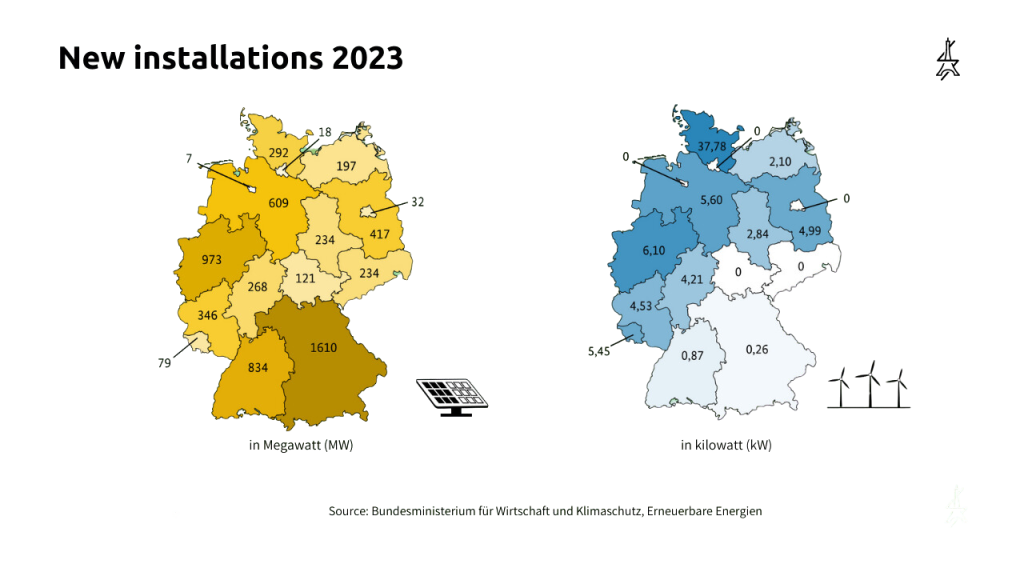
However, renewable energy sources produced 256 TWh of electricity, around 9% more than in 2021. This is mainly due to an increase of 23% in solar production, with wind power remaining the main renewable energy source.
In total, renewable energies accounted for 44.4% of German electricity production in 2022, placing the country down the middle of the European scale, with Sweden leading the march and Malta closing it.
Germany is transitioning towards renewables.
Coal and natural gas still play a significant role in its energy mix.
In 2022, France’s gross electricity generation rose by 6.8% to 1.524 TWh, with nuclear power accounting for 75% of the total. The rest is made of 24% renewables and 1% fossil energies.
However, the country’s primary energy consumption was 2 571 TWh, with 40% nuclear power, 28% fossil fuel, 15% LNG and 14% renewables and 3% coal.
After the Covid pandemic, the country’s greenhouse gas emissions have rebounded to around 604 million tonnes of CO2 equivalent, missing the national target that was set at 422 Mt CO2 eq by the national plan « Stratégie nationale bas-carbone (SNBC) ».
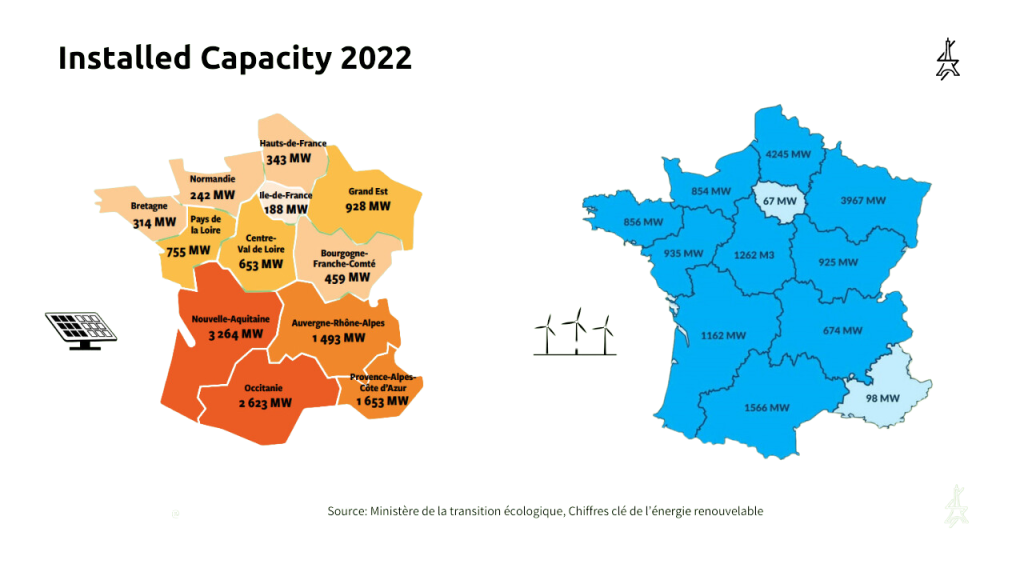
However, the renewables are growing at a fast pace, with strong government incentives.
In 2022, the renewable share was split among 49% hydro, 31% wind, 12% PV and the remaining 8% split among other sources.
France relies mainly on nuclear power.
Coal energy is declining, and renewables are growing.
#ChooseFrance
#FrenchTouch
#greentech
#funding
We can help you manage your collaboration with German companies, taking into account not only language differences but also cultural and socio-political criteria.
Check out your options here.